


Software teams today often manage QA across disconnected spreadsheets, scattered documentation and fragmented workflows that create context switching, administrative overhead, lost testing time and limited visibility. Meanwhile, many enterprise QA platforms continue adding excessive feature layers and rigid processes that force teams to spend more time managing systems than executing tests.
TestLodge was built to simplify QA for modern software teams. Designed for software companies, digital agencies and QA teams, the platform centralises test management and collaboration into one structured environment that helps teams stay focused on testing instead of administration. Its “Simplicity by Design” philosophy prioritises intentional usability, fast onboarding and practical execution.
 Founded in 2013, TestLodge has grown around the belief that test management software should help teams move faster, not burden them with feature-bloated systems and rigid processes. Its “Zero Learning Curve” approach allows teams to adopt structured testing workflows quickly while maintaining the flexibility to adapt processes around their existing QA operations.
“We built TestLodge to eliminate disconnected workflows and reduce the operational burden that slows testing teams down,” says Scott Sherwood, CEO and founder. “The focus has always been creating a system that keeps testers inside the testing flow while still giving organisations the structure and visibility they need.”
Removing Complexity from Modern Test Management
At the core of TestLodge is a flexible system organised around test plans, requirements, test suites, test cases and test runs. Together, these components allow teams to manage requirements mapping, test coverage, execution tracking and re-runs within one structured environment while adapting to different QA workflows without rigid methodologies.
TestLodge was built to simplify QA for modern software teams. Designed for software companies, digital agencies and QA teams, the platform centralises test management and collaboration into one structured environment that helps teams stay focused on testing instead of administration. Its “Simplicity by Design” philosophy prioritises intentional usability, fast onboarding and practical execution.
Founded in 2013, TestLodge has grown around the belief that test management software should help teams move faster, not burden them with feature-bloated systems and rigid processes. Its “Zero Learning Curve” approach allows teams to adopt structured testing workflows quickly while maintaining the flexibility to adapt processes around their existing QA operations. “We built TestLodge to eliminate disconnected workflows and reduce the operational burden that slows testing teams down,” says Scott Sherwood, CEO and founder. “The focus has always been creating a system that keeps testers inside the testing flow while still giving organisations the structure and visibility they need.”
Removing Complexity from Modern Test Management
At the core of TestLodge is a flexible system organised around test plans, requirements, test suites, test cases and test runs. Together, these components allow teams to manage requirements mapping, test coverage, execution tracking and re-runs within one structured environment while adapting to different QA workflows without rigid methodologies.
The platform is especially useful for organisations trying to move away from siloed spreadsheets and scattered testing documents. CSV and Google Sheets imports enable teams to bring existing test cases into TestLodge without interrupting active projects. Drag-and-drop organisation and editable test cases make it easier to adjust and refine testing workflows as products continue to evolve.
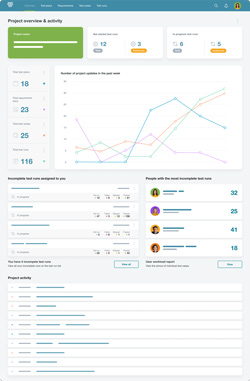
TestLodge also reduces the repetitive administrative work that often slows QA operations. Testers can quickly log pass or fail results, add comments, monitor progress through real-time dashboards and maintain complete testing histories through timestamped audit histories that strengthen traceability and audit preparedness for regulated environments. The platform additionally supports unlimited-user collaboration, allowing developers, product managers and stakeholders to participate in testing activities without creating access barriers or limiting project visibility across teams.
Enabling Seamless Collaboration between QA and Development Teams
 TestLodge further differentiates itself through an integration-first architecture built to reduce context switching. TestLodge integrates with more than 20 project management and issue-tracking platforms, including Jira, Trello and Linear. Failed tests can automatically create or update tickets with relevant testing details attached, while two-way integrations pull issue statuses directly back into TestLodge so teams can generate targeted re-runs without rebuilding test runs manually.
This approach has worked especially well for distributed organisations managing QA across different regions and time zones. One global digital agency moved away from fragmented spreadsheet-based workflows and adopted TestLodge as a centralised testing environment that brought hundreds of test suites into one shared system. The shift reduced manual reporting work and gave teams much clearer real-time visibility across international QA operations.
Alongside usability and workflow efficiency, TestLodge continues strengthening its enterprise credibility through SOC 2 compliance, GDPR compliance, MFA support, Google SSO integration and detailed audit histories that support accountability, traceability and audit preparedness for security-conscious organisations.
As software delivery cycles continue accelerating, businesses increasingly need QA platforms that improve testing efficiency without slowing teams down. By combining focused usability, fast onboarding and structured testing workflows, TestLodge continues to be a practical, lower-overhead alternative to feature-bloated enterprise QA systems for modern software teams.
We built TestLodge to eliminate disconnected workflows and reduce the operational burden that slows testing teams down.
TestLodge also reduces the repetitive administrative work that often slows QA operations. Testers can quickly log pass or fail results, add comments, monitor progress through real-time dashboards and maintain complete testing histories through timestamped audit histories that strengthen traceability and audit preparedness for regulated environments. The platform additionally supports unlimited-user collaboration, allowing developers, product managers and stakeholders to participate in testing activities without creating access barriers or limiting project visibility across teams.
Enabling Seamless Collaboration between QA and Development Teams
TestLodge further differentiates itself through an integration-first architecture built to reduce context switching. TestLodge integrates with more than 20 project management and issue-tracking platforms, including Jira, Trello and Linear. Failed tests can automatically create or update tickets with relevant testing details attached, while two-way integrations pull issue statuses directly back into TestLodge so teams can generate targeted re-runs without rebuilding test runs manually.This approach has worked especially well for distributed organisations managing QA across different regions and time zones. One global digital agency moved away from fragmented spreadsheet-based workflows and adopted TestLodge as a centralised testing environment that brought hundreds of test suites into one shared system. The shift reduced manual reporting work and gave teams much clearer real-time visibility across international QA operations.
Alongside usability and workflow efficiency, TestLodge continues strengthening its enterprise credibility through SOC 2 compliance, GDPR compliance, MFA support, Google SSO integration and detailed audit histories that support accountability, traceability and audit preparedness for security-conscious organisations.
As software delivery cycles continue accelerating, businesses increasingly need QA platforms that improve testing efficiency without slowing teams down. By combining focused usability, fast onboarding and structured testing workflows, TestLodge continues to be a practical, lower-overhead alternative to feature-bloated enterprise QA systems for modern software teams.
Test Management That Keeps QA Moving
Software delivery has become faster, more distributed and more dependent on disciplined quality assurance, yet many QA teams still work through a patchwork of spreadsheets, shared folders and issue trackers. The result is rarely one large failure. It is usually a steady loss of testing time, incomplete visibility, unclear ownership and duplicated reporting work. When those records are scattered, missed regressions and unclear scope can reach decision meetings too late to correct efficiently. For executives, the problem is not simply whether testing happens, but whether testing produces evidence that release decisions can trust.
The strongest test management tools reduce that friction without forcing teams into a heavy system that competes with the work it is meant to support. A platform should make test plans, requirements, test cases, test suites and test runs easier to manage in one place. It should let QA leaders understand coverage, progress and defects without asking teams to build separate status reports. Adoption also matters. If a tool requires long training cycles or rigid methodology changes, it can slow the same delivery groups it was purchased to help. Software leaders should favour clear workflows that guide testers, product managers and developers through repeatable activity while leaving room for each organisation’s release process.
Modern software organisations also need clean movement between QA and development. Defects should not sit in one system while developers work in another with partial context. Failed tests should translate into useful tickets, linked records and clear retesting paths. That connection is especially important for distributed teams, where time zones and handovers can magnify small process gaps. A test management system earns its place when it reduces switching between tools, keeps evidence attached to the work and gives both testers and developers a common view of what remains unresolved. The commercial value comes from better release confidence, not from adding more dashboards for their own sake.
“The value of test management lies not in tracking more tests, but in giving organisations greater confidence in every software release.”
Executive buyers should also examine how well a tool balances simplicity with accountability. Minimalism is valuable only when it preserves the controls needed for traceability, audit readiness and secure collaboration. Dashboards, testing histories, permissions, authentication support and compliance posture all shape whether a platform can serve both fastmoving product teams and larger organisations with governance expectations. Import capability is another practical test, because many teams cannot pause delivery to rebuild years of test cases before a new system becomes useful. The best fit is not the tool with the longest feature list. It is the tool that gives QA teams enough structure to work consistently while keeping administrative effort low.
The same balance is why UK-headquartered TestLodge stands out as a premier choice for test management. It focuses on practical QA execution through test plans, requirements, suites, cases and runs, while supporting imports from spreadsheets so teams can move away from fragmented records without disrupting active work. Its integrations with tools such as Jira, Trello and Linear help failed tests create or update development tickets and support targeted re-runs. TestLodge also strengthens enterprise suitability through SOC 2 Type II certification, GDPR compliance, Google SSO, two-factor authentication and audit histories. For organisations that want structured testing without platform bloat, it offers a disciplined, low-friction path forward.
...Read more
Online Test Case Management Tools Info
Q1
How Does TestLodge Support Structured Software Testing?
Testing becomes hard to control when plans, requirements and run results sit in separate files. TestLodge brings these parts into one web-based workspace where QA teams can document test plans, organise requirements, build test suites and execute test runs. For teams comparing Online Test Case Management Tools, that matters because the testing record stays visible as products, websites or apps change. The workflow also gives managers a clearer view of what has been tested, what remains open and which release questions still need attention.
Q2
What Should Teams Expect From Online Test Case Management Tools?
Online Test Case Management Tools should give software testers a clear path from planning to execution. That usually means test plan documentation, requirement coverage, reusable test suites, pass/fail tracking and reports that show where work stands. The strongest tools reduce scattered spreadsheets and unclear handoffs, especially when teams need to know which requirements have been verified before a release moves forward. Good systems also make the work easy to revisit when a feature changes or a customer-reported defect needs retesting.
Q3
Why Is Issue-Tracker Integration Important?
A failed test often loses value when it sits in a report without becoming developer work. Online Test Case Management Tools help by connecting test execution with the issue trackers teams already use. When a tester marks a case as failed, a ticket can be raised or updated without rebuilding the defect record by hand. That saves time and gives developers cleaner context. It also limits the back-and-forth that happens when screenshots, steps or expected results are missing from a bug report.
Q4
Where Does TestLodge Fit in QA Workflows?
TestLodge keeps its workflow deliberately uncluttered. Testers can import existing test cases from spreadsheets, group cases into suites and assign runs by browser, device or team member. Its reports and dashboards show testing progress, recent activity, workload and common passed, failed or skipped tests. Those details make Online Test Case Management Tools useful beyond documentation; they help teams see where testing is moving and where it is stuck. Senior team support, video tutorials and knowledge resources add practical help without crowding the product.
Q5
How Can Buyers Judge Ease of Use?
A useful trial should involve real test cases, not a polished demo. Teams should import a spreadsheet, map a few requirements, run tests and check how quickly defects move into the tracker. Online Test Case Management Tools that feel simple during that exercise are more likely to fit daily QA work. Permissions, custom roles and reporting should also be checked before rollout. A tool may look capable in a feature list, but the real test is whether testers return to it without being pushed.
Q6
What Creates Long-Term Value in This Category?
Long-term value comes from keeping testing records current without adding extra admin work. Online Test Case Management Tools need to support collaboration, traceability and clear reporting while staying flexible enough for different project methods. Pricing can matter too; unlimited-user access can make adoption easier when testers, developers and managers all need visibility into the same release evidence. The category works best when it shortens the path from planned coverage to completed test runs and helps quality conversations stay grounded in current data.
× 
CIO Applications Europe Weekly Brief
Be first to read the latest tech news, Industry Leader's Insights, and CIO interviews of medium and large enterprises exclusively from CIO Applications Europe
