


Karl Technology
Container-Native Virtualization for Resource-Efficient Infrastructure
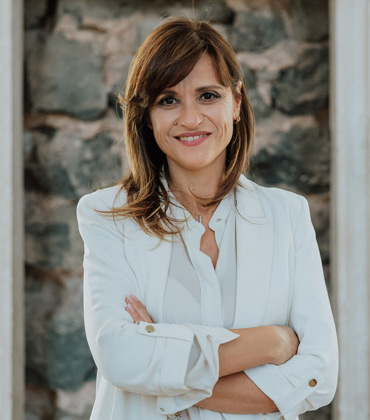 Loredana Facciolà, Chief Product Officer
“We believe the future of infrastructure is in minimising the resources needed to deliver computing,” says Loredana Facciolà, chief product officer. “Whether it is a workstation, a server or a complete IT service, the goal should be delivering only the resources truly required in that moment.”
The architecture rests on a patent Karl calls kernel-in-pod, which moves the operating system kernel out of the traditional virtual machine and into a Kubernetes pod. The unit of virtualization becomes container-native and disposable.
That’s it, it’s particularly effective on VDI workspaces infrastructure. Resources flow from a shared pool only while a workload runs and release when a session ends. The result is less idle infrastructure, simpler workspace management and a scalability model that flexes with real demand rather than peak provisioning. Storage costs drop. Power consumption drops. The administrative weight of pre-allocation drops with them. Security increases due to the ephemeral nature of the virtual endpoint used by the user.
Internally, Karl describes the resulting security posture as a ‘theory of nothing.’ If a system doesn’t persist, there’s nothing for an attacker to find and nothing to maintain when idle.
“The more persistent an environment becomes, the harder it is to control risk over time,” says Facciolà.
One Platform, Three Doors In
Karl bundles virtualization, orchestration and DaaS into a single per-VCPU subscription with three licensing entry points. Karl Basic covers hypervisor and orchestration. Karl Flex adds DaaS for the full stack. Karl DaaS supports organisations focused purely on VDI workspace delivery.
The product is the same; only the doors differ. An automated migration capability helps customers move from existing systems without manually rebuilding environments, which is commercially important for enterprises reconsidering their virtualization stacks.
Administrators prepare master workspace images with approved applications, permissions and compliance policies, then replicate those configurations.
A single control plane governs on-premises, hybrid and cloud deployments, giving the customer full flexibility to choose at any time the colocation of their infrastructure, enabling migration without significantly revising the architecture.
Security as a Property, Not a Layer in KARL VDI clusters
The ephemeral model produces a security posture without stacked external tools. Sessions that show signs of compromise can be killed and rebuilt in seconds, with the user profile intact. Karl Warden, the native security guardian, monitors for anomalies and policy violations and automatically acts on both, destroying the VDI, which is automatically rebuilt brand-new in a few seconds by the system as a clean replica of the master (without the violation, anomaly or virus detected).
Moreover, native alignment with ISO/IEC 27001:2022 across access management, domain policy controls, malware protection, data leakage prevention and asset inventory positions Karl as a turnkey compliance-ready solution for regulated sectors such as banking, healthcare and telco.
The Engineering Test Case of a KARL VDI infrastructure
A sample of an efficient use case of a KARL VDI infrastructure in an engineering company.
Engineering workloads test a VDI solution harshly. Workstations are powerful, demand is volatile and misallocation costs show up directly in project margins. One Karl deployment, sold through a partner, replaced a fleet of high-spec workstations with a pool of virtual environments accessed via lightweight devices. Onboarding became as fast as snapping fingers. Computing capacity flexed with demand instead of staying sized for peak. New environments could be made available via remote connection, eliminating the need to purchase, configure and ship a workstation. Patching the fleet is easier and faster: the sysadmin just has to patch the master and the change propagates as workspaces regenerate.
The deployment removed two persistent inefficiencies at once. Talent could work from anywhere through a URL and the workstations themselves stopped depreciating in storage between contracts.
“Computing demand changes constantly,” says PierNunzio Pennisi, general manager. “Infrastructure should adapt just as dynamically.”
A European Position
Karl is Italian, headquartered in Europe and expanding across APAC and the Gulf, with a commercial flagship opening in Bangalore. Its European identity carries weight at a moment when enterprises are reassessing their platform dependency and its pooled-resource model addresses the underlying constraint. Raw materials are scarce, compute demand keeps climbing and minimising consumption is one of the few responses that scales.
For its patented, container-native approach to enterprise virtualization and its work in proving that ephemeral workspaces can scale under enterprise governance, CIO Applications Europe recognises Karl Technology with the ‘Top Cloud Native Virtualization and DaaS Solution in Europe 2026’ award.
Karl bundles virtualization, orchestration and DaaS into a single per-VCPU subscription with three licensing entry points. Karl Basic covers hypervisor and orchestration. Karl Flex adds DaaS for the full stack. Karl DaaS supports organisations focused purely on VDI workspace delivery.
The product is the same; only the doors differ. An automated migration capability helps customers move from existing systems without manually rebuilding environments, which is commercially important for enterprises reconsidering their virtualization stacks.
We believe the future of infrastructure is in minimising the resources needed to deliver computing. Whether it is a workstation, a server or a complete IT service, the goal should be delivering only the resources truly required in that moment.
Administrators prepare master workspace images with approved applications, permissions and compliance policies, then replicate those configurations.
A single control plane governs on-premises, hybrid and cloud deployments, giving the customer full flexibility to choose at any time the colocation of their infrastructure, enabling migration without significantly revising the architecture.
Security as a Property, Not a Layer in KARL VDI clusters
The ephemeral model produces a security posture without stacked external tools. Sessions that show signs of compromise can be killed and rebuilt in seconds, with the user profile intact. Karl Warden, the native security guardian, monitors for anomalies and policy violations and automatically acts on both, destroying the VDI, which is automatically rebuilt brand-new in a few seconds by the system as a clean replica of the master (without the violation, anomaly or virus detected).
Moreover, native alignment with ISO/IEC 27001:2022 across access management, domain policy controls, malware protection, data leakage prevention and asset inventory positions Karl as a turnkey compliance-ready solution for regulated sectors such as banking, healthcare and telco.
The Engineering Test Case of a KARL VDI infrastructure
A sample of an efficient use case of a KARL VDI infrastructure in an engineering company.
Engineering workloads test a VDI solution harshly. Workstations are powerful, demand is volatile and misallocation costs show up directly in project margins. One Karl deployment, sold through a partner, replaced a fleet of high-spec workstations with a pool of virtual environments accessed via lightweight devices. Onboarding became as fast as snapping fingers. Computing capacity flexed with demand instead of staying sized for peak. New environments could be made available via remote connection, eliminating the need to purchase, configure and ship a workstation. Patching the fleet is easier and faster: the sysadmin just has to patch the master and the change propagates as workspaces regenerate.
The deployment removed two persistent inefficiencies at once. Talent could work from anywhere through a URL and the workstations themselves stopped depreciating in storage between contracts.
“Computing demand changes constantly,” says PierNunzio Pennisi, general manager. “Infrastructure should adapt just as dynamically.”
A European Position
Karl is Italian, headquartered in Europe and expanding across APAC and the Gulf, with a commercial flagship opening in Bangalore. Its European identity carries weight at a moment when enterprises are reassessing their platform dependency and its pooled-resource model addresses the underlying constraint. Raw materials are scarce, compute demand keeps climbing and minimising consumption is one of the few responses that scales.
For its patented, container-native approach to enterprise virtualization and its work in proving that ephemeral workspaces can scale under enterprise governance, CIO Applications Europe recognises Karl Technology with the ‘Top Cloud Native Virtualization and DaaS Solution in Europe 2026’ award.
Choosing the Gold Standard for Cloud-Native Workspaces
Software development leaders are being asked to support larger, more distributed teams without letting infrastructure sprawl become a cost center in its own right. Traditional virtual desktop and virtualization estates often struggle under that pressure because they were built around fixed machines, reserved capacity and layered management tools. For engineering groups, those limits are especially visible. Developers need controlled environments, specialist compute, secure access to code and fast onboarding, yet demand shifts by project, sprint, geography and client requirement. Buying more machines or reserving more virtual capacity may solve an immediate bottleneck, but it often leaves management teams paying for idle resources and carrying unnecessary security exposure.
The stronger model for cloud-native virtualization and desktop delivery begins by treating compute as something that should appear when work is active and return to the pool when it is not. That changes the economics of workspaces. A remote developer, contractor or project engineer should not require a costly workstation, long provisioning cycle or permanent virtual machine merely to access an approved environment. Executives should look for a platform that can preserve the user layer while refreshing the runtime cleanly, because that balance protects continuity without letting every session become a long-lived liability.
Control matters as much as efficiency. Software development organizations cannot afford fragmented administration across hypervisors, containers, desktop delivery, storage and identity. The right platform should give infrastructure teams a single, governed view of clusters, networks, workspace pools and access policies, while reducing the manual effort required for provisioning, recovery and support. This is not only an IT staffing issue. It affects release discipline, security posture and the speed at which teams can add or remove contributors from sensitive projects. The buying decision also has to account for migration risk. A solution that forces a wholesale break from existing estates may slow adoption, while a platform that supports phased movement can let teams modernize without interrupting current delivery commitments.
Security should also be judged by architecture rather than after-the-fact tooling. Persistent desktops can accumulate risk when users install software, open unsafe links or carry corrupted states from one session to the next. A stronger approach limits what an attacker can hold onto. Workspaces that can be terminated and rebuilt from a controlled model give teams a practical way to reduce exposure while preserving the files and settings that need to remain governed outside the session. For buyers, the most persuasive solutions will combine this reset logic with centralized policy control, support for existing infrastructure choices and enough flexibility to run across on-premises, private cloud and public cloud environments.
Karl Technology stands out for organizations that want this shift without separating virtualization from desktop delivery. Its Karl platform uses Kubernetes-orchestrated instances, a unified control plane and Enterprise DaaS capabilities to reduce the weight of always-on virtual machines. Karl Core supports the virtualization foundation, Karl Flex combines that foundation with DaaS delivery and Karl DaaS provides the workspace layer for buyers who do not need the hypervisor and orchestrator components. For software development executives, Karl Technology is a focused choice when the priority is controlled access, pooled resources, faster workspace recovery and a cleaner path from legacy virtual desktops to cloud-native delivery.
...Read more
Cloud-Native Virtualization and DaaS Solutions in Europe Info
Q1
How Does Karl Technology Approach Cloud-Native Virtualization and DaaS Solutions in Europe?
Legacy virtual desktop estates often leave IT teams paying for machines that sit idle, even when no one is using them. Karl Technology addresses that problem with a container-native model built around Kubernetes-orchestrated instances that appear when work is active and return resources when sessions end. Its patented architecture, WO2023/012553, gives Cloud-Native Virtualization and DaaS Solutions in Europe a lighter foundation than always-on virtual machines. The practical aim is simple: keep the desktop experience available while avoiding permanent compute waste.
Q2
What Problems Do Cloud Workspaces Help IT Teams Solve?
Distributed teams need approved desktops, secure access and fast onboarding without shipping workstations or overbuying capacity. Cloud-Native Virtualization and DaaS Solutions in Europe help replace scattered hardware, fixed virtual machines and slow provisioning with workspaces that can be delivered through controlled remote access. Better designs also reduce the chance that idle infrastructure becomes a cost burden or a security gap. For project teams, that can mean faster starts, cleaner exits and fewer machines waiting between assignments.
Q3
Why Do Ephemeral Desktops Matter for Security and Cost Control?
Ephemeral desktops change the workspace from a permanent asset into a controlled session. When something looks wrong, the runtime can be ended and rebuilt from a clean model while user state remains separate. That approach makes Cloud-Native Virtualization and DaaS Solutions in Europe useful for teams that want tighter control over access, fewer long-lived machines and a simpler way to recover from workspace issues. The user keeps continuity, while the compute layer does not linger longer than needed.
Q4
What Should Buyers Review Before Replacing Legacy VDI?
A proper evaluation should look at how the platform manages identity, storage, networking, workspace recovery and existing cloud environments. Cloud-Native Virtualization and DaaS Solutions in Europe should offer more than a new interface built around old VDI practices. Buyers should test real workloads instead of relying only on demos to understand how resources behave when sessions end and whether administrators can manage the environment without adding unnecessary complexity. Support for on-premises systems, private clouds and major public cloud platforms is also important when organizations need to transition gradually.
Q5
How Does Karl Technology Support Different Deployment Needs?
Karl Technology separates its offering into editions that match different infrastructure plans. Karl Basic focuses on the virtualization foundation with hypervisor-grade control and orchestration. Karl Flex combines that base with enterprise DaaS capabilities for governed workspace delivery. Karl DaaS provides the workspace layer without the hypervisor and orchestrator components. That structure lets Cloud-Native Virtualization and DaaS Solutions in Europe support buyers moving at different speeds. It also avoids forcing every organization into the same full-stack adoption path.
Q6
What Quality Signals Matter in This Category?
Security and reliability claims need process discipline behind them. Buyers should look for clear controls around access, rebuild behavior, data handling and repeatable service delivery. Cloud-Native Virtualization and DaaS Solutions in Europe become more credible when providers can show quality and security practices, not just product claims. Karl Technology’s stated certifications include ISO 9001, ISO/IEC 25002 and ISO/IEC 27001, 27017 and 27018. Those markers matter because cloud workspaces often touch sensitive identity, device and user-session data.
× 
CIO Applications Europe Weekly Brief
Be first to read the latest tech news, Industry Leader's Insights, and CIO interviews of medium and large enterprises exclusively from CIO Applications Europe
